To answer “what size solar system do I need?”, start with 12 months of electricity usage, not your bill's dollar total. For an Australian grid-connected home, the right size depends on daytime demand, usable roof space, local sunlight and future appliances. A daily energy total alone cannot select your system.
At a glance
- Across Australia, solar sizing starts with how much electricity you use and when you use it.
- Panel capacity, inverter capacity and the network export limit are different quantities; ask for each separately.
- Roof direction and seasonal shading affect generation, so identical system sizes need not produce identical results.
- An electric vehicle, electric hot water or a battery can change the design brief; include firm plans before requesting quotes.
This guide covers grid-connected homes, not a design for taking a property off-grid. Official guidance was checked on 8 October 2026.
What size solar system do I need based on my bill?
Use the bill's electricity consumption in kilowatt-hours (kWh) as your starting point, then check when that consumption occurs.
The Australian Government's sizing guide explains that average daily use is total electricity consumed divided by days in the billing period. Check bills across the seasons rather than treating a mild-weather bill as representative of the whole year.
A dollar total is not a measure of energy demand. Instead, give installers the usage figures and your electricity plan so they can distinguish system sizing from the financial forecast.
If you have a smart meter, the government recommends requesting 12 months of interval data from your distribution network service provider. That reveals the timing hidden inside a daily average; a home with daytime cooling needs a different assessment from one whose appliances mainly run after sunset.
For an existing solar home, flag that you already generate electricity. Ask the installer to account for solar used directly in the house, rather than treating grid imports alone as your whole household demand.
How are panel size, inverter size and energy output different?
Panel size describes generating capacity in kilowatts (kW); electricity produced or consumed over time is measured in kWh.
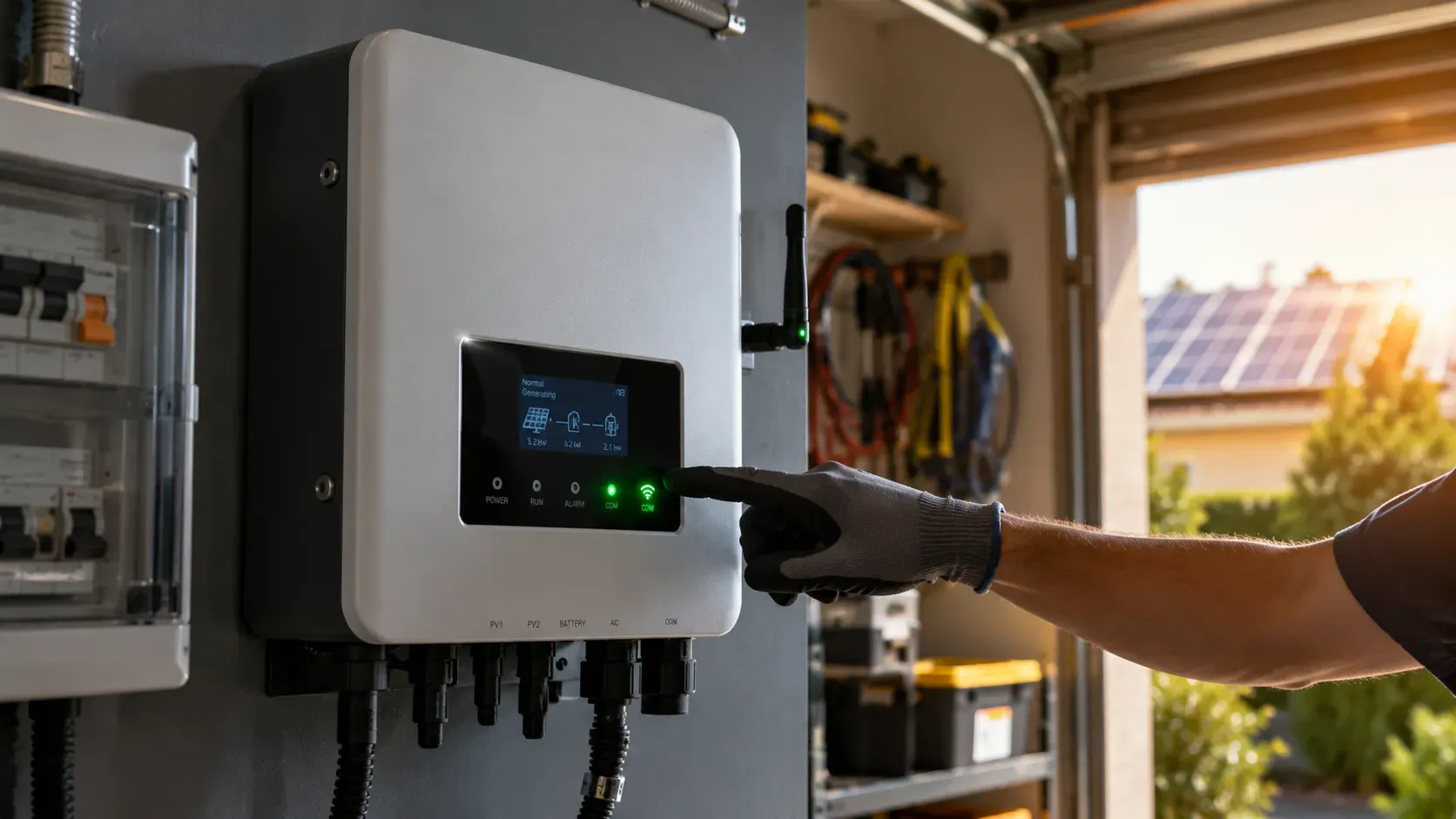
Energy.gov.au defines system size as the combined rated capacity of the panels. It also notes that 6.6 kW of panels is often paired with a 5 kW inverter, because panels rarely generate at their full rated capacity.
That pairing is not a universal design instruction. The inverter must suit the panels and the manufacturer's specifications, and the installer must check the proposed connection with the network.
For an illustrative panel-count calculation, assume panels rated at 440 W each: 15 × 440 W ÷ 1,000 = 6.6 kW. The conversion follows the government's definition of a kilowatt; the panel rating and count here are chosen inputs, not a recommended product or layout.
The following comparison is a discussion tool, not a household-size prescription. The 10 kW option is an illustrative alternative to quote, not a claim that every large household needs it.
| Option to compare | Question it should answer | Evidence to request |
|---|---|---|
| 6.6 kW of panels | Does this cover useful daytime demand on this roof? | Seasonal generation and usage matched by time |
| 10 kW of panels | Where would the additional generation go? | Extra self-consumption, battery charging, exports and curtailment |
| A roof-specific alternative | Would a different layout better suit shading or future loads? | Panel layout, inverter choice and network approval assumptions |
A bigger number on the quote is useful only when the design explains what the additional capacity achieves.
How do roof space, shading and network limits affect size?
Your practical limit is the roof area that can generate usefully within an approved design, not simply the roof's total area.
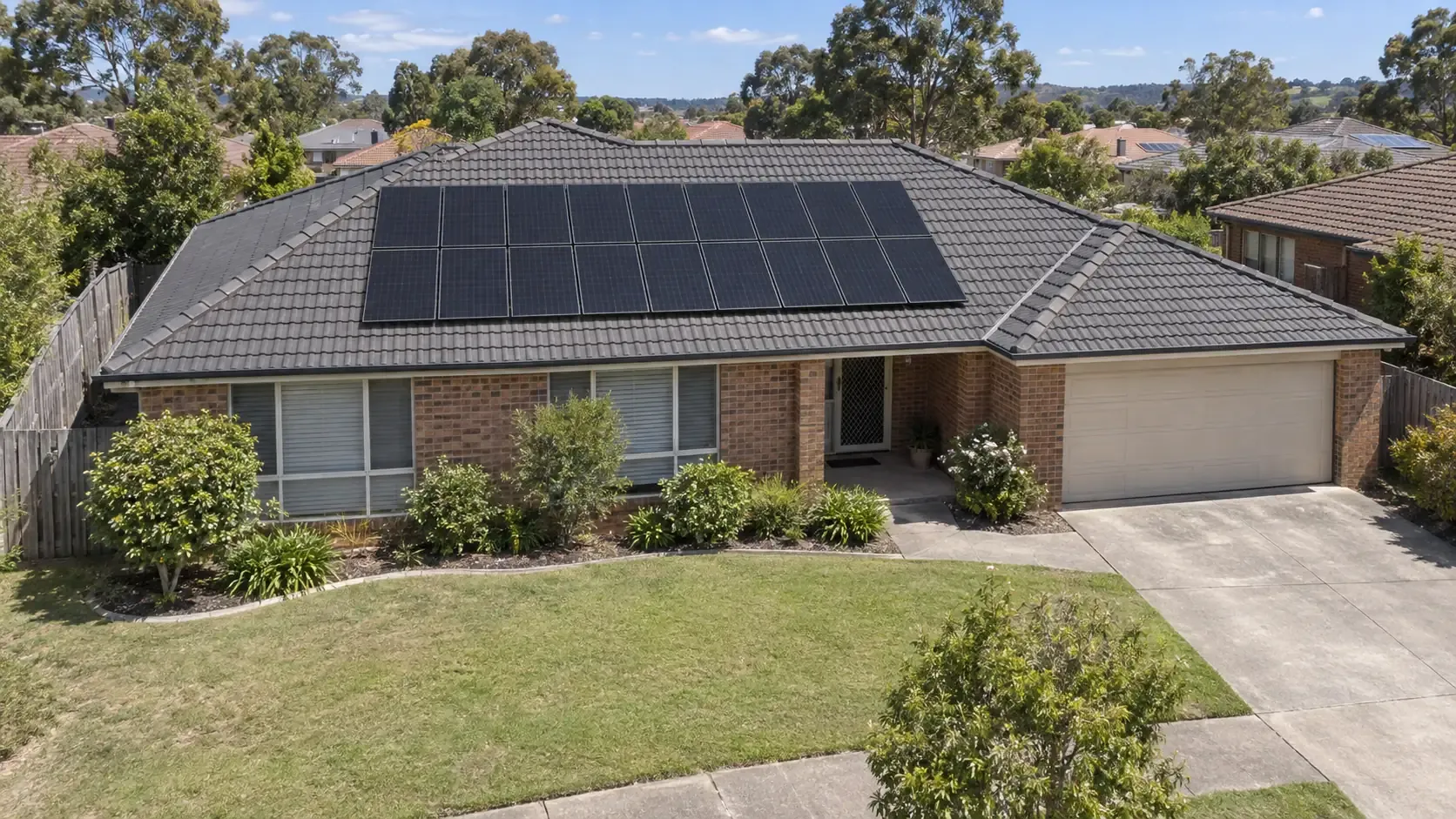
The government's solar design guidance says north-facing panels usually receive the most sunlight over the day. East-facing panels generate earlier and west-facing panels later, so a mixed layout may suit your usage better than chasing maximum midday output alone.
Shading changes with the season and time of day. Ask for a panel layout showing the effect of trees, neighbouring buildings and roof obstructions, rather than accepting an aerial photograph with panels drawn over every spare patch.
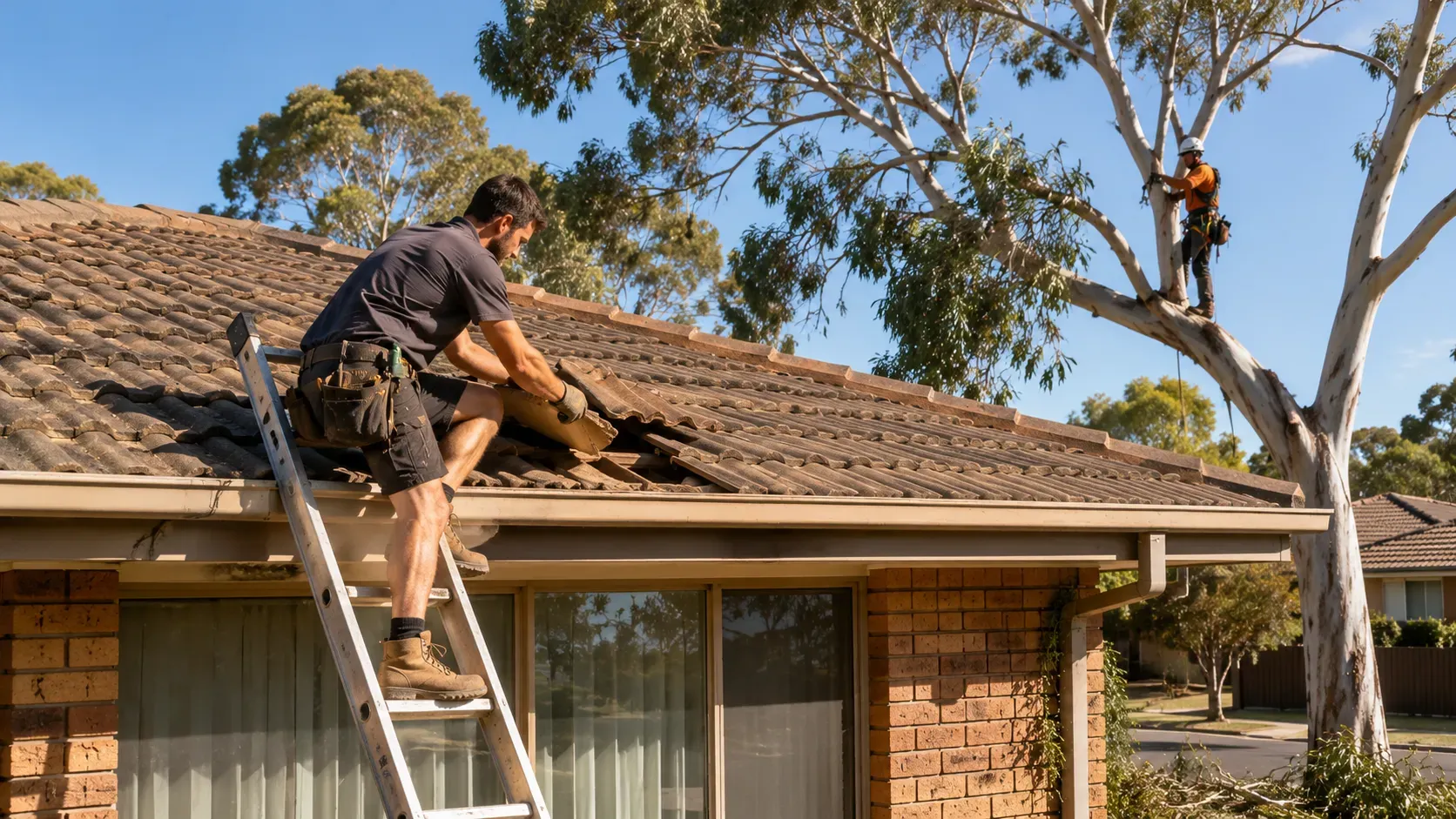
Roof condition matters too: the same guidance recommends doing foreseeable roof repairs or replacement before installation. Our solar-ready home checklist helps you organise that discussion without climbing onto the roof yourself.
The national sizing guide distinguishes connection and export limits. Your distributor sets the applicable limits; they are not a single Australia-wide allowance, and an export limit is not automatically the same as the maximum panel capacity.
Ask each installer to name your distributor and confirm the connection arrangement, any export control and the effect on the proposed design. Do not accept a network example from another state as approval for your address.
How should EVs, hot water and batteries change the plan?
Include expected new electricity demand before choosing solar capacity, but separate firm purchases from possibilities.
The government sizing guide specifically identifies electric vehicles and switching gas hot water, cooking and heating to electricity as changes that can increase demand. Tell installers what equipment you expect to add and when you expect to run it.
For an EV, explain whether the car will be home while solar is generating. For electric hot water, ask the equipment installer about suitable operating schedules; do not assume all of the new consumption will automatically coincide with solar production.
A battery changes where surplus energy can go, but does not create more solar electricity. The government's battery guidance distinguishes stored energy in kWh from power output in kW and explains that charging and discharging lose some energy.
Ask for the solar-only case and the solar-plus-battery case separately. Compare usable capacity, the surplus available to charge it and the demand it would serve later; our solar battery guide covers the broader buying decision.
What does the maths look like for a Brisbane home?
A solar system can generate more energy over a day than a home uses and still leave that home buying electricity at night.
Consider an illustrative Brisbane household, not a real customer. Assume its bill records 1,800 kWh over 90 days, giving 1,800 ÷ 90 = 20 kWh a day, with 8 kWh used during solar hours and 12 kWh outside them.
For a conditional generation example, energy.gov.au says a 6.6 kW system in Brisbane could generate about 28 kWh on a sunny day. That is not a guaranteed daily yield or a winter forecast.
Assume, for this simplified example, that generation coincides with all daytime demand, there is no battery and the network permits the surplus to be exported:
- Solar generation: 28 kWh.
- Solar used directly: 8 kWh.
- Surplus exported: 28 − 8 = 20 kWh.
- Electricity still bought outside solar hours: 12 kWh.
The household does not become self-sufficient just because daily generation exceeds daily consumption. If clouds interrupt generation, daytime imports may also occur; if exports are constrained, some surplus may be curtailed rather than exported.
A battery could move some surplus into the evening, subject to usable capacity, power limits and losses. Before buying a larger array, ask whether its extra generation would serve new loads, charge storage or mostly become additional exports.
What should you check on quotes for different system sizes?
Compare the assumptions behind each design before comparing the headline capacities or prices.
- Usage evidence: ask which bills or interval data were used and whether existing solar was accounted for.
- Equipment: get panel quantity and wattage, total array kW, inverter model and inverter kW separately.
- Roof modelling: request panel positions, orientation, shading assumptions and seasonal output estimates.
- Energy flows: ask how much generation is expected to be used directly, stored, exported or curtailed.
- Future demand: identify which EV, hot-water or heating plans are included, and what changes if they do not happen.
- Connection and scope: confirm the distributor's requirements, export controls, switchboard work and exclusions.
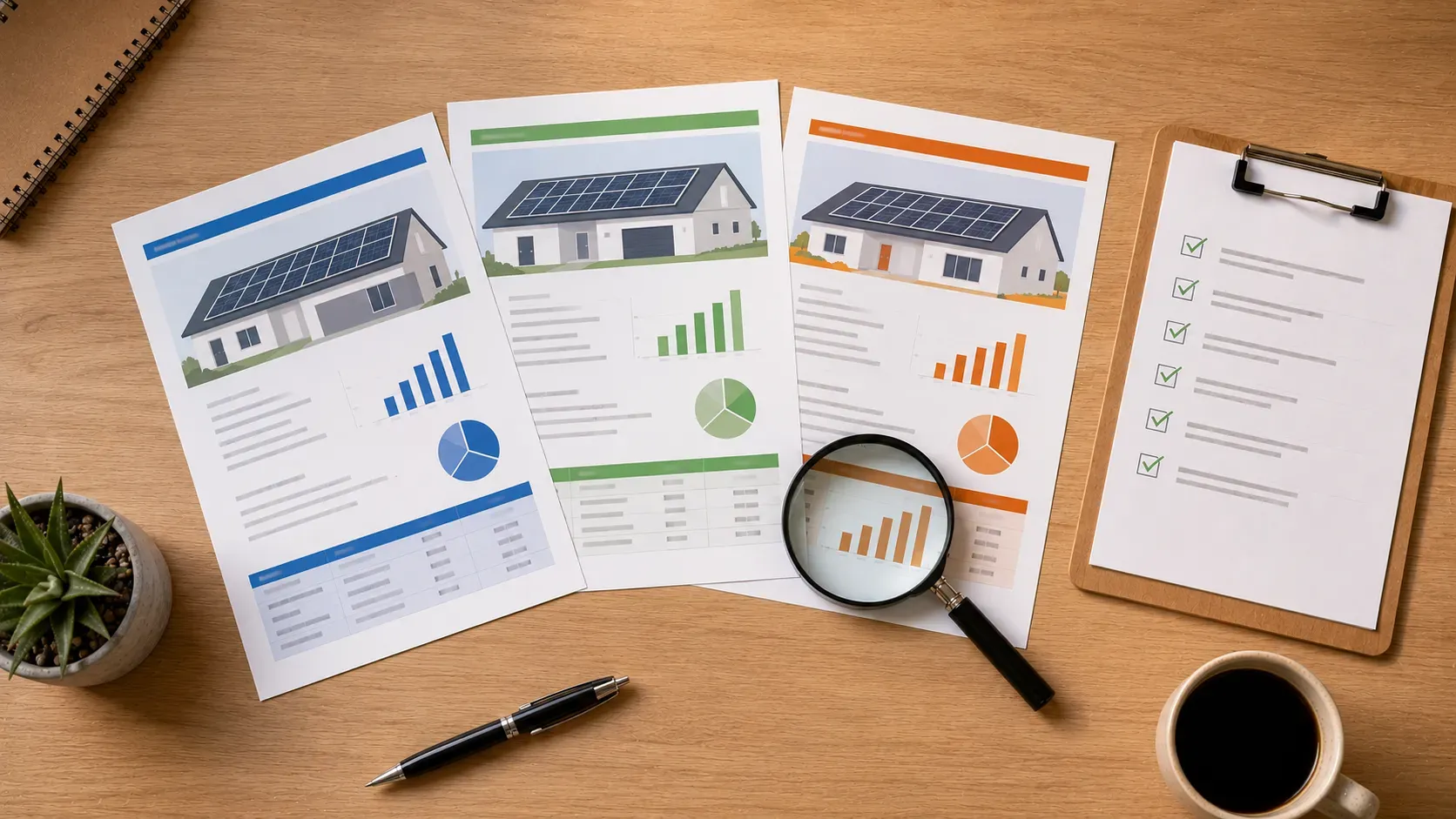
Give every installer the same usage information. If the recommended sizes differ, ask each to explain the difference rather than assuming either the smallest or largest is correct; our solar quote comparison checklist helps keep the wider comparison consistent.
Frequently asked questions
Is a 6.6 kW solar system big enough?
It may be, but there is no universal household match. The government sizing guide bases the decision on consumption, timing, roof space, climate and budget. Ask for seasonal generation matched to your usage, including planned appliances, rather than accepting the system size as a guarantee of coverage.
Is 10kW solar enough to run a house?
The panel rating alone cannot answer that question. Local sunlight, roof conditions and when appliances run all matter, as the government design guide explains. Producing enough energy across a day is different from supplying every appliance whenever needed; overnight supply and off-grid operation require separate consideration.
Is it better to have more solar panels or more batteries?
That depends on what your current design lacks. More panels add generating capacity; a battery stores energy for later. The government battery guide explains the role of surplus generation and storage. Compare both options against your demand and budget, rather than assuming either upgrade always offers better value.
How many solar panels do I need for a 10kWh battery?
Battery capacity alone does not determine panel count. The array must serve daytime demand as well as provide energy for charging, allowing for losses. Use official solar sizing guidance to assess your roof, local generation and usage; ask the installer to model battery charging through the seasons.
Compare before you commit
The best starting point is your own electricity use, a realistic roof layout and a clear explanation of where the energy will go. Compare up to three free solar quotes through Your Solar Quotes, giving each installer the same information so you can assess the designs on the same basis.
Sources
- Australian Government, Size your solar system, checked 8 October 2026.
- Australian Government, Design considerations, checked 8 October 2026.
- Australian Government, Batteries, checked 8 October 2026.