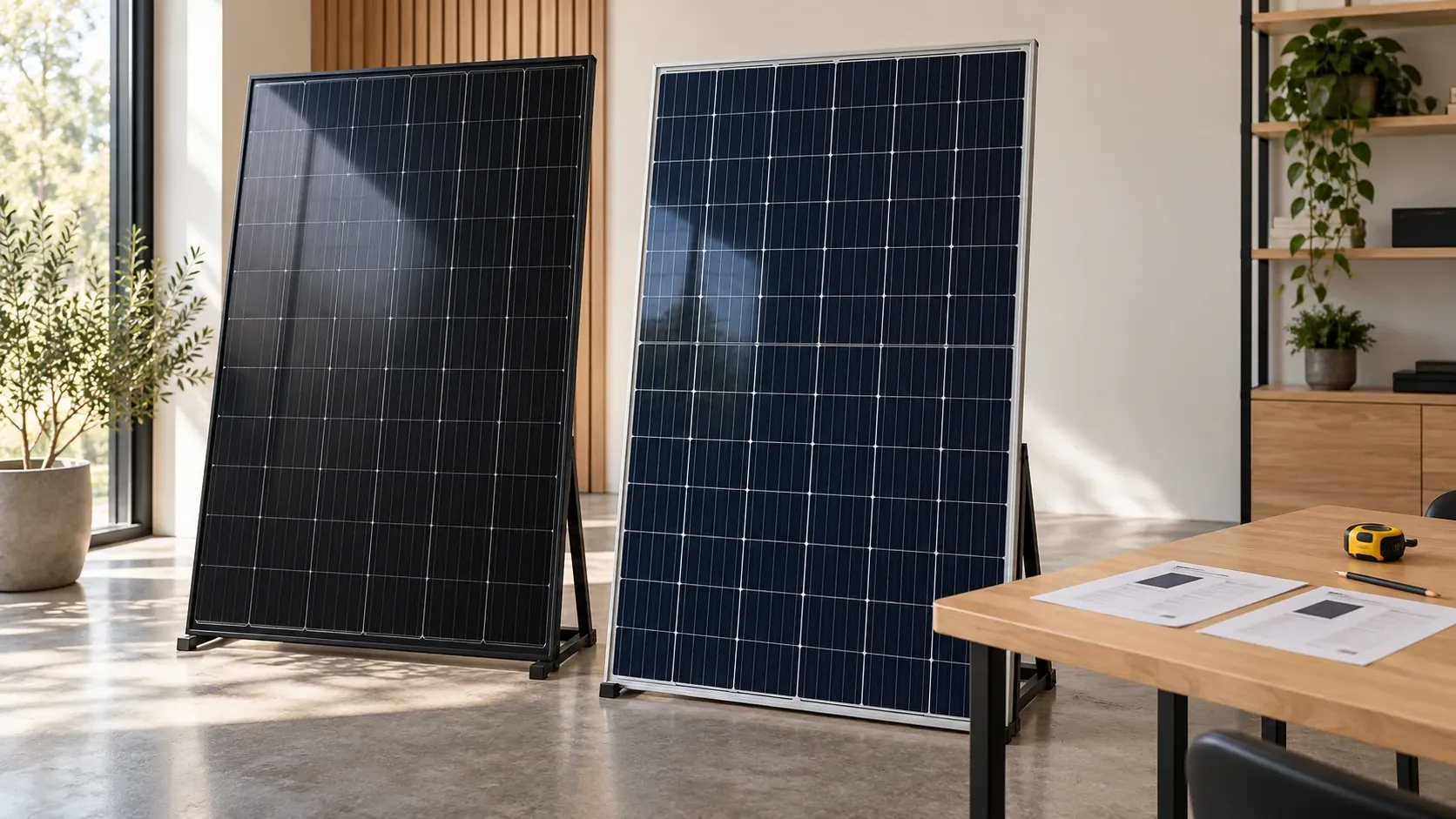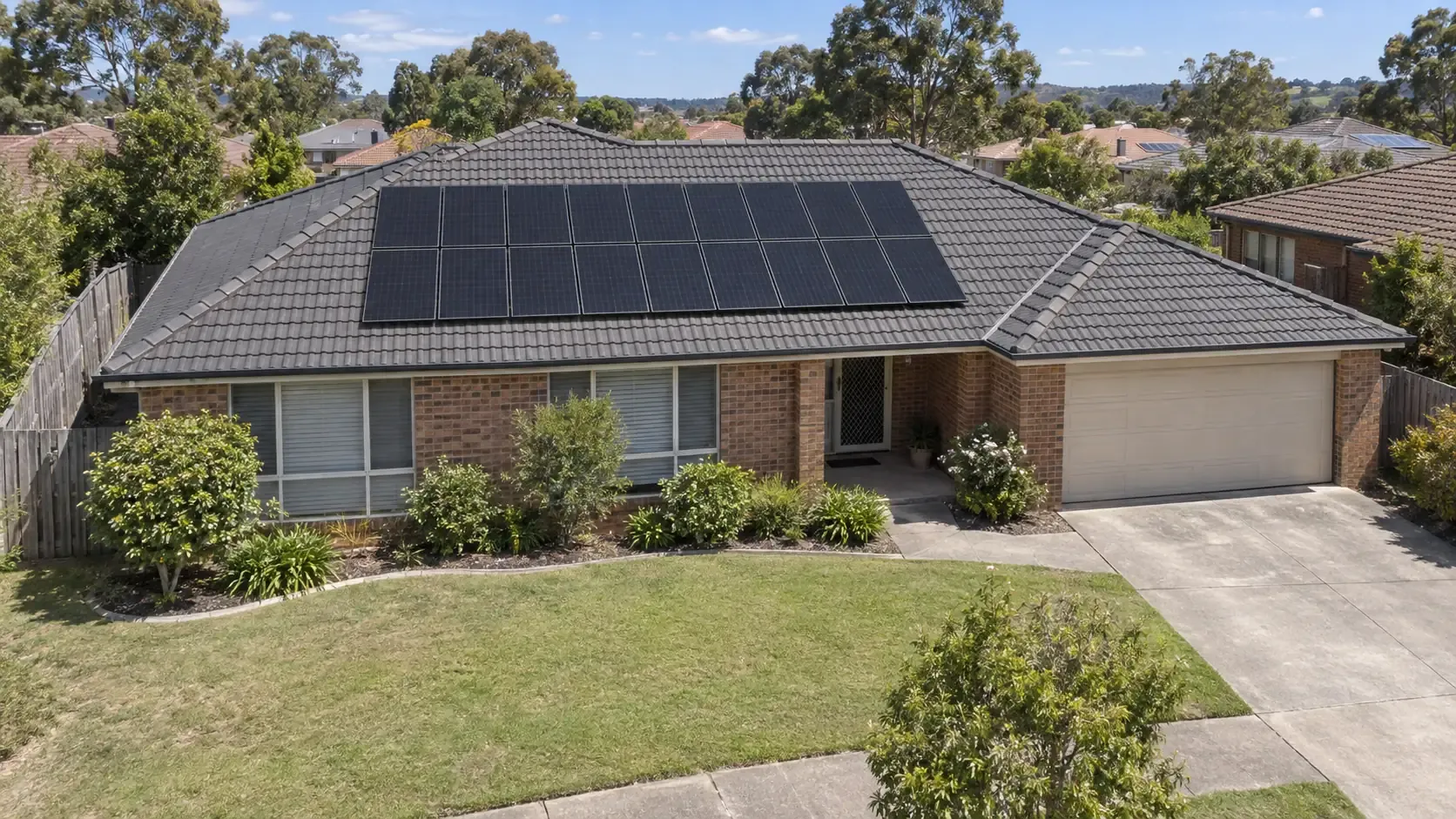
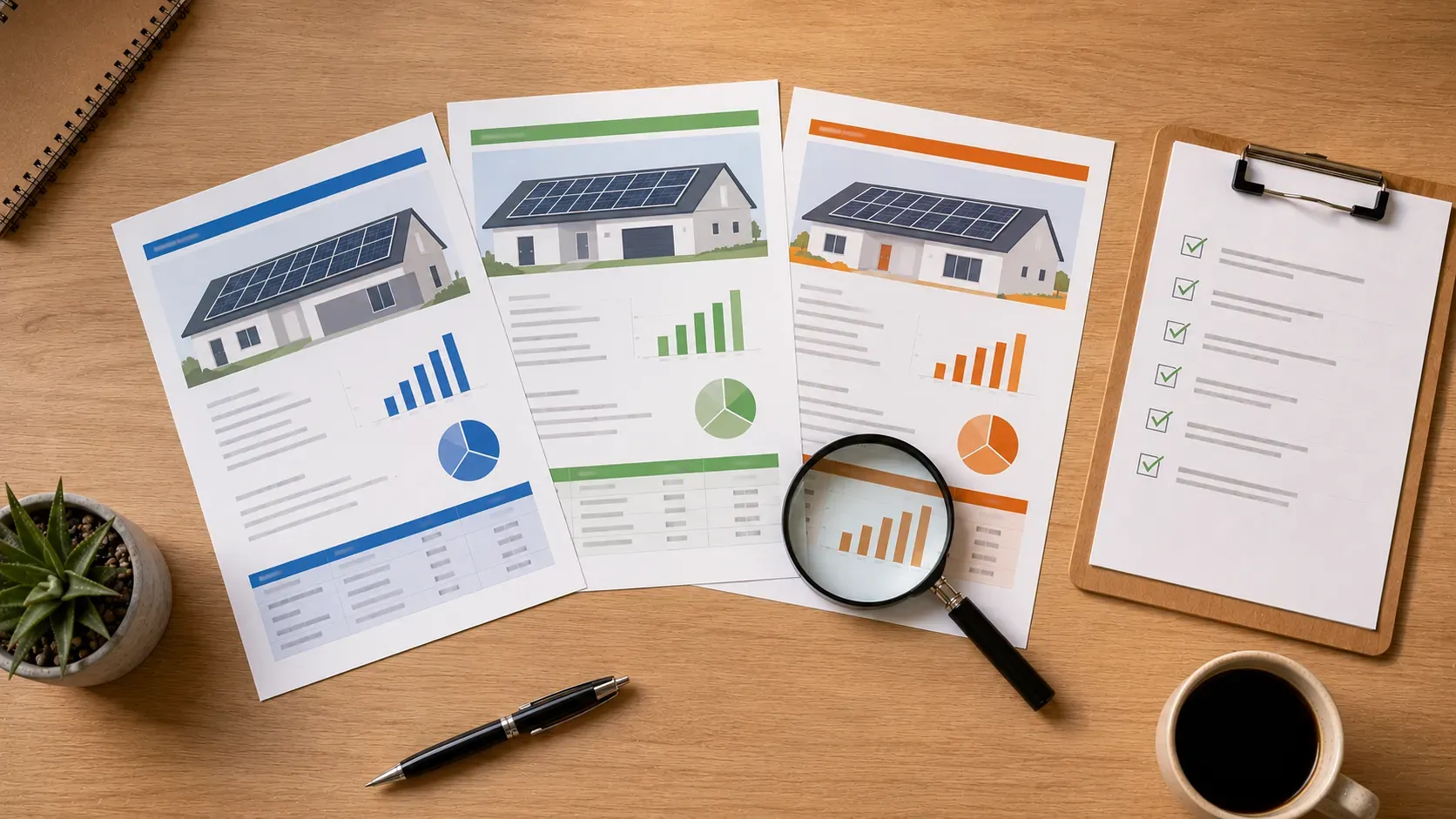
Getting a solar quote in 2026 is easy. Judging one is the hard part — because a single quote is really just one company's opinion about what your roof needs, priced the way that suits them. Get three quotes and suddenly you can see who's oversizing, who's underquoting to win the job, and whose numbers actually stack up.
Here's the checklist we'd use to compare them like a pro.
The 2026 quote comparison checklist
1. System size — and the reasoning behind it
Every quote should explain why it recommends that size: your daytime vs evening usage, your bills, your roof orientation and shading. If one quote says 6.6kW, another says 10kW and a third says 13.3kW, ask each installer to justify it against your actual consumption. "Bigger is better" is a sales line, not an analysis — especially now that midday exports earn very little in most states.
2. Equipment brands and the three warranties
A quote that just says "Tier 1 panels" is telling you nothing. You want exact panel, inverter and (if quoted) battery makes and models, plus three separate warranties spelt out:
- Product warranty — covers defects in the hardware itself.
- Performance warranty — guarantees the panels still produce a stated percentage after 25–30 years. Impressive-sounding, but rarely the one that matters day to day.
- Workmanship warranty — covers the installation itself (racking, wiring, roof penetrations). This one comes from the installer, which is exactly why the company's survival matters (see point 6).
3. The STC discount, itemised
The federal small-scale certificate (STC) incentive should appear as a clearly itemised line — the gross system price, the STC discount, and the net price you pay. If it's baked invisibly into a single number, you can't compare quotes apples-to-apples. Our solar rebates guide explains how STCs are calculated and why the discount steps down over time.
4. The battery rebate tier, itemised (if a battery is quoted)
Since 1 May 2026, the federal Cheaper Home Batteries Program is tiered by usable capacity: the highest rate applies to the first 14kWh, a reduced rate to 14–28kWh, and a much lower rate up to the 50kWh cap (Clean Energy Regulator). A professional quote shows the battery's usable capacity, the rebate amount, and how it was calculated. If you're weighing up whether to include storage at all, start with our solar battery guide.
5. Payback assumptions
Two quotes can promise "4-year payback" using wildly different assumptions. Check what each assumes for: your electricity rate (and whether it escalates), your self-consumption percentage, and the feed-in tariff. In 2026, any payback built on a generous feed-in tariff should be treated with suspicion — typical rates are now only a few cents per kilowatt-hour in most states (check your state regulator's published rates).
6. Installer solvency — will they exist when you need the warranty?
This is the check most buyers skip, and it's arguably the most important one in 2026. More than 270 Australian solar companies have collapsed since 2010, leaving roughly 650,000 households with warranties that are now worthless paper, according to industry trackers of collapsed solar companies. When an installer folds, the workmanship warranty usually dies with it, and chasing a manufacturer warranty without a functioning retailer becomes your problem.
So ask: How many years have you been trading under this ABN? Who handles warranty claims if the hardware fails? What's your review history — not just the glowing testimonials on their own website?
7. After-sales support
Who do you call when the app shows zero output on a sunny Tuesday? Look for monitoring included in the price, a stated service response time, and a local presence rather than a call centre that subcontracted your install to someone you've never met.
Check the company, not just the hardware
Panels are commodities in 2026 — the top brands are all good. The real variable is the business behind the quote. A middle-priced quote from a ten-year-old company with hundreds of verified reviews beats the cheapest quote from a two-year-old ABN every time. Cross-check every installer against independent feedback: our solar reviews hub has more than 15,000 reviews of Australian installers, and every installer in our network is vetted before we send them your details. For more buying guidance, browse our solar tips.
Frequently asked questions
How many solar quotes should I get?
Three is the practical minimum. One quote is a single company's opinion, and with two you still can't tell which one is off. With three, the outlier on system size, price or inclusions usually stands out within minutes. Going beyond three rarely changes the decision — it just adds sales calls. Whatever the number, make sure each installer is quoting the same house, the same bills and the same brief, or you're not comparing like with like.
Should all three quotes be for the same system size?
Not necessarily, but every quote has to justify its size against your usage. Give each installer identical information: recent bills, when you use power, roof photos, and any battery or EV plans. If the recommended sizes still differ, ask each installer to explain the gap. A quote that is bigger or smaller than the others isn't automatically wrong, but "that's what fits on the roof" or "the rebate is better on a bigger system" is a sales line, not an analysis.
How should the STC discount appear on a quote?
As its own line. Most households assign the right to create their small-scale technology certificates (STCs) to the installer or a registered agent in exchange for an upfront discount, rather than selling the certificates themselves. Ask every quote to show the gross system price, the STC discount and the net price you pay, so the three can be compared directly. The number of certificates a system earns depends on where it is, its size and its installation date, and the Clean Energy Regulator notes that the deeming period decreases by one year each year until the scheme ends in 2030. If your install could slip into the next calendar year, ask which year's entitlement the quote assumes.
How do I check that an installer is accredited?
Ask for the installer's Solar Accreditation Australia (SAA) accreditation number and look it up on SAA's accreditation status check, which searches by number or by name. To be eligible for the STC discount, the Clean Energy Regulator says the system must be installed by a qualified and accredited person and points buyers to SAA-accredited installers, so an installer who can't produce a current number is a deal-breaker rather than a negotiating point. If the company selling the system is different from the person installing it, also check whether the seller is listed as a New Energy Tech Approved Seller — signatories to the New Energy Tech Consumer Code commit to clear quotes and contracts with no hidden costs.
What if the cheapest quote is from a company I've never heard of?
Treat the price as a reason to dig, not a reason to sign. Check how long the business has traded under its current ABN on the free ABN Lookup, read its review history somewhere other than its own website, ask who will handle a warranty claim in year eight, and go back through this checklist for anything the quote leaves out — exclusions are the most common way a cheap quote stays cheap. If it still stacks up, cheap and new isn't a problem. Cheap and evasive is.
Put the checklist to work
Print this list, get three quotes, and score each one against it. The differences will jump out within minutes. Ready to start? Get quotes from up to 3 vetted local installers — free, fast and no obligation.