The best solar inverter in Australia is the one matched to your roof, battery plans and support needs. Compare 3 options: string, hybrid and microinverters, rather than choosing by brand alone. This guide, checked on 10 November 2026, helps grid-connected Australian households compare designs without assuming a hybrid guarantees backup or microinverters eliminate shading.
At a glance
- String inverters connect groups of panels; panels sharing a string should have similar sunlight conditions.
- Microinverters let panels operate independently and can suit roofs with different slopes or orientations.
- Hybrid inverters combine solar and battery inverter functions, but backup needs a suitable system design.
- Compare exact models, monitoring access and warranty terms, not just the brand on the quote.
These distinctions follow the Australian Government's inverter guide. This is a buying framework, not a laboratory test, reliability ranking or endorsement of a manufacturer.
How do you choose the best solar inverter in Australia?
Choose the system arrangement first, then compare the exact inverter models that can deliver it.
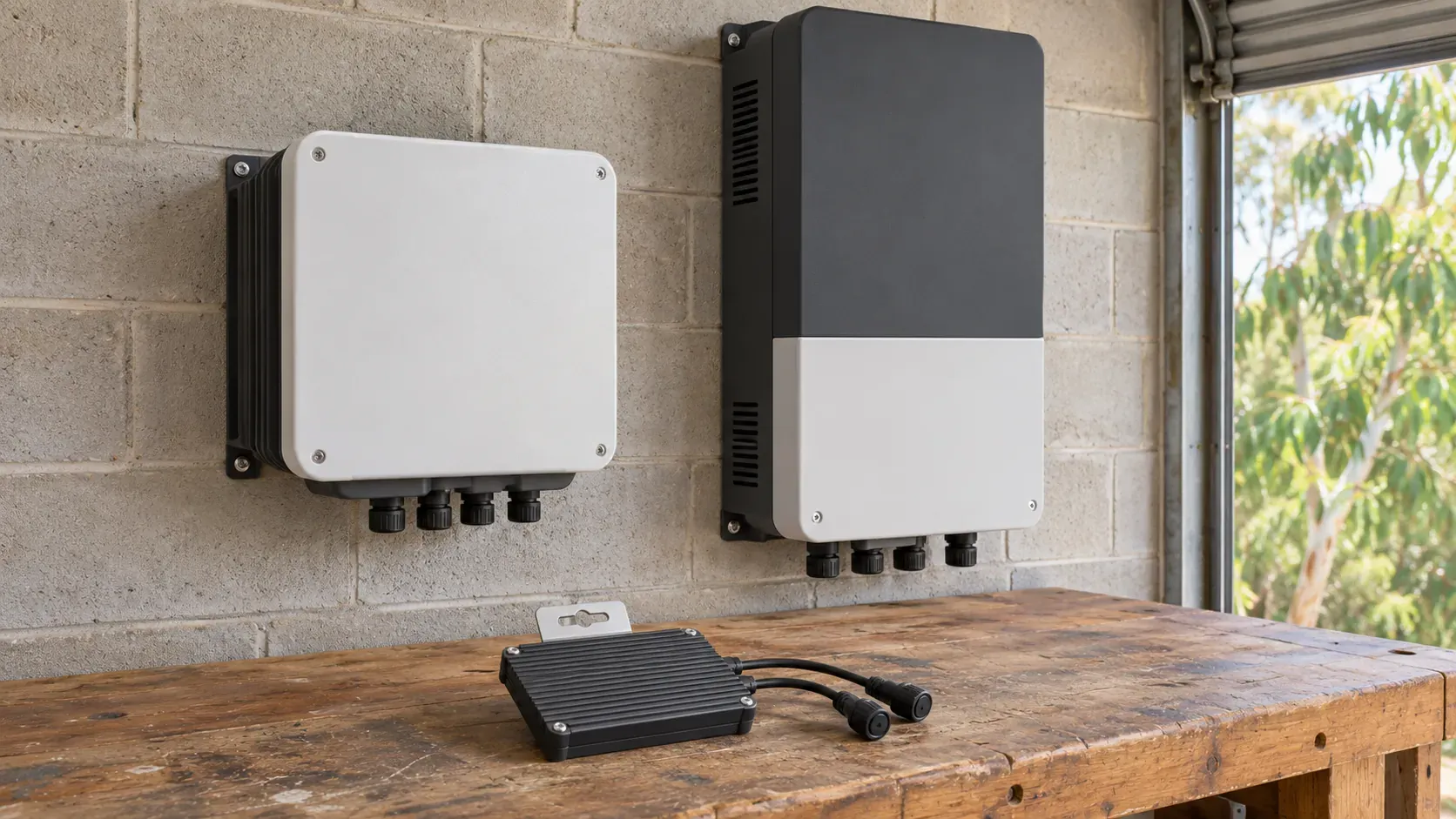
An inverter converts the panels' direct current (DC) electricity into alternating current (AC) used by household appliances. The government guide distinguishes wall-mounted string inverters from microinverters fitted beneath individual panels, and identifies hybrid inverters as combining solar and battery functions.
Start with a short brief: your roof layout, shading, electricity use, whether you want storage now, and which appliances matter during an outage. Give the same brief to each installer so you are comparing answers to the same problem.
There is an important overlap in the terminology. Hybrid describes battery functionality, while string and microinverter describe how solar conversion is arranged. A hybrid can serve strings of panels; it is not automatically a panel-level solution for shade.
Before buying, the government guide recommends checking the inverter against the Clean Energy Council's approved list. Ask the installer to identify the exact listed model, including its suffix, rather than accepting an approval claim for the brand as a whole.
How do string, hybrid and microinverter options compare?
The useful comparison is what each arrangement does for your property, not which label sounds most advanced.
The table summarises the government inverter guidance and turns it into questions for your quote. It deliberately avoids unverified installed prices and brand scores.
| Option | Compare for | Key quote check |
|---|---|---|
| String | Similar sun conditions in each panel group | Panel grouping and shade assessment |
| Hybrid | Solar and storage bought together | Battery pairing and backup scope |
| Micro | Mixed roof slopes or uneven shade | Site-specific benefit and full cost |
For a relatively simple roof without an immediate battery purchase, a suitable string design is a sensible starting comparison. That is an editorial starting point, not a rule that a string inverter always wins.
For storage installed alongside solar, compare a hybrid-based design with the alternatives your installer proposes. Do not pay for a vaguely described future capability: ask which battery pairing the design actually supports.
For microinverters, ask how servicing will be handled if a rooftop unit needs attention. Equipment access, fault diagnosis and the person responsible for arranging service belong in the comparison alongside the hardware.
Do microinverters solve shading and complicated roofs?
Microinverters can help panels operate independently, but they cannot replace sunlight that shade prevents from reaching a panel.
The government guide says microinverters can suit multiple roof sections with different slopes and orientations, and may offer better performance where panels are shaded. It also notes that if one microinverter fails, the other panel-and-microinverter units can continue working; that is not a guarantee against every system fault.
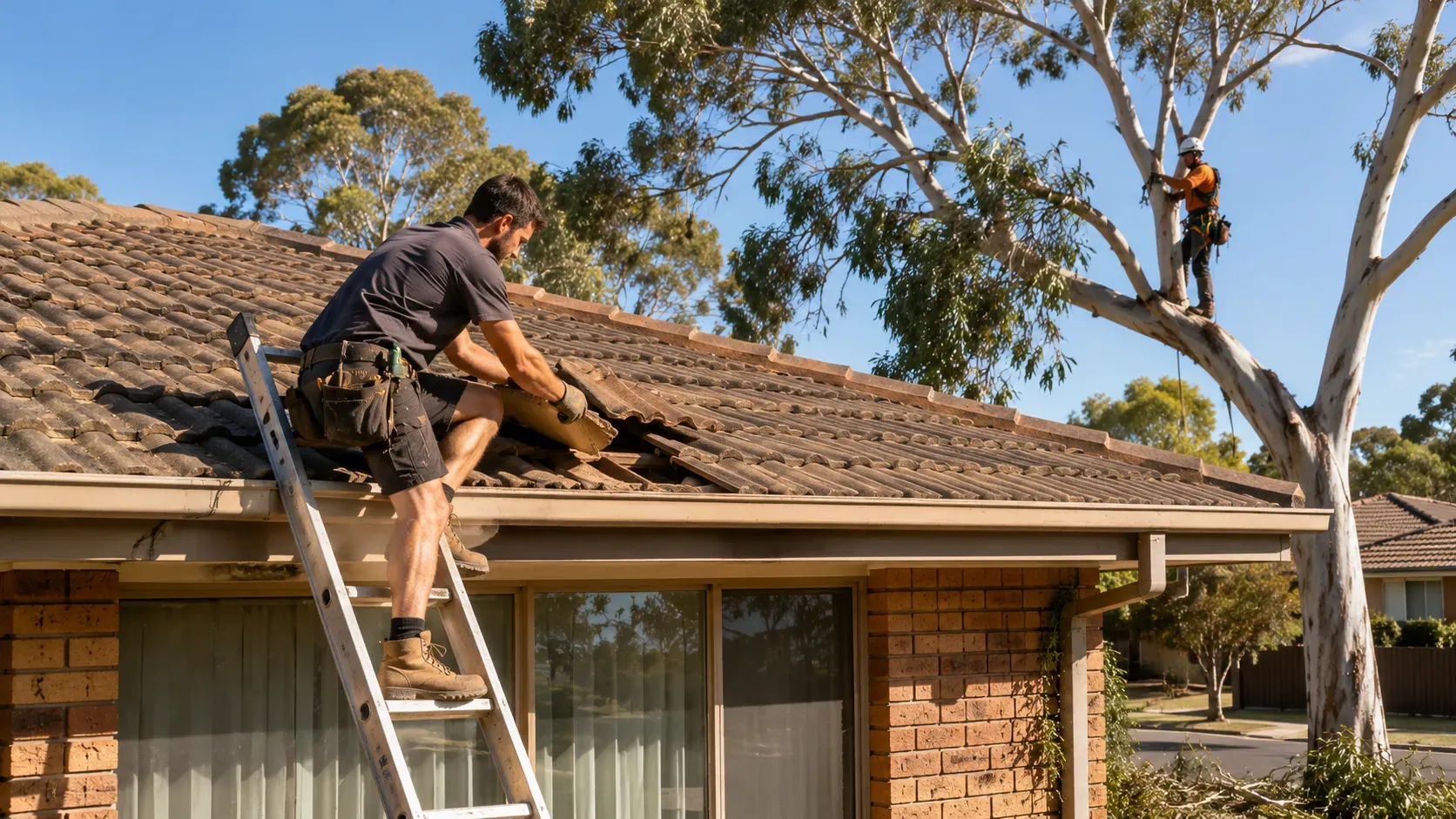
Ask for the shading assessment behind the recommendation. Which panels are affected, during which hours, and in which seasons? A photograph taken at midday is not a complete explanation of a tree's effect throughout the year.
Request generation estimates using the same roof, weather and shading assumptions for each proposal. If the microinverter option costs more, the installer should explain what the additional scope buys without promising a universal percentage improvement.
Power optimisers are another option identified by the government guide. They operate at panel level with a string inverter; they are not microinverters under a different name. Ask why the proposed approach fits your roof rather than treating all panel-level equipment as interchangeable.
Does a hybrid inverter make your home battery-ready and blackout-ready?
A hybrid can provide a route to storage, but compatibility and blackout operation must be specified separately.
The government battery guide explains that DC-coupled solar and storage use a hybrid inverter, while AC coupling uses solar and battery inverter functions separately. Existing solar owners can usually keep their solar inverter and add a battery inverter, subject to the particular design.
That means a string or microinverter purchase does not automatically rule out storage later. Our guide to adding a battery to existing solar covers the retrofit decision; here, the key buying question is which future route the quoted equipment supports.
Backup is not automatic. The government explains that very few grid-connected solar-only systems supply power during an outage, and a battery must be capable of backup and configured for it.
Write down the circuits you want supported. Ask whether the proposal backs up those circuits, what simultaneous load it can supply, and whether solar can recharge the battery while the grid is down. For a three-phase property, ask which phases receive backup rather than assuming the whole house remains powered.
If a battery is only a possibility, request a solar-only option and a clearly specified storage-ready alternative. Compare what you would buy today and what additional work would remain later; do not treat “future-proof” as a technical specification.
What does inverter sizing look like for a Sydney household?
Panel capacity and inverter capacity are separate numbers, and their ratio alone does not establish a suitable design.
Consider an illustrative Sydney household, not a real customer, comparing a proposal with 16 panels rated at 415 W each and a 5 kW AC inverter. Those ratings and quantities are chosen assumptions, not specifications for a recommended product.
- Total panel nameplate capacity: 16 × 415 W ÷ 1,000 = 6.64 kW DC.
- Panel-to-inverter capacity ratio: 6.64 ÷ 5 = 1.328.
The calculation describes the proposed ratings only. It does not establish annual production, clipping losses, export permission, rebate eligibility or that the inverter can accept this array. It is not a national sizing limit or a recommendation to install that combination.
Ask the designer to explain the chosen ratio using the exact inverter's permitted inputs, the roof layout and the expected operating conditions. For a hybrid proposal, Solar Victoria's inverter guidance also highlights battery output, household loads and intended backup as sizing considerations.
The household should therefore compare designs, not simply replace “5 kW” with a larger number. Our solar system sizing guide helps frame the wider consumption assessment. No savings, generation or payback prediction is included in this example.
What should you check on your inverter quote?
A useful quote records the design, equipment and service responsibilities clearly enough for you to compare alternatives.
Use this checklist before accepting a substitution or signing a contract:
- Exact equipment: manufacturer, complete model code, AC rating, phase configuration and the applicable approved listing.
- Roof design: panel layout, string grouping or panel-level equipment, shading assumptions and an explanation of the sizing choice.
- Battery and backup: compatible battery models, any additional equipment, selected circuits and stated outage behaviour, if requested.
- Monitoring: owner access, what data is included, connection requirements, any ongoing fees and who helps if reporting stops.
- Warranty and service: written Australian terms, registration requirements, claims contact and responsibility for diagnosis, labour, access, removal and replacement.
- Installation scope: mounting position, electrical work, network application responsibilities, commissioning and every exclusion from the installed price.
Solar Victoria explains that many inverters offer Wi-Fi or ethernet connectivity and web-based monitoring. Ask for a demonstration of the actual quoted system rather than assuming every model includes the same data or that panel-level monitoring is standard.
The government inverter guide recommends avoiding direct sunlight for wall-mounted string inverters. Have the installer specify a location meeting the manufacturer's requirements; do not move or open equipment yourself.
This guide compares purchasing options, not state-by-state connection rules. Ask for written confirmation of the current requirements for your address and proposed equipment. Our solar buying tips can help organise the broader quote comparison.
Frequently asked questions
What is the best brand of solar inverter in Australia?
A brand name alone cannot identify the best inverter for your home. The government inverter guide distinguishes options by roof conditions and battery plans. Compare the exact approved model, proposed layout, monitoring and service terms. This guide has not established an independent brand ranking or universal winner.
Which brand of solar inverter is considered the best?
That depends on the criteria and the particular model being compared. Start with the government's inverter checks, including the approved product listing and suitability for your solar arrangement. Ask for written warranty and support details rather than treating a brand's reputation as evidence that every model suits your roof.
Which solar inverter brand is best rated?
This guide does not verify a best-rated brand. A rating needs a named source, date and clear method before it can support a comparison. Instead, use the government inverter guidance to shortlist suitable designs, then compare exact equipment and ask who will diagnose and resolve faults after installation.
What are the best solar inverters in Australia in 2026?
The appropriate shortlist depends on your roof and storage plans, not the year alone. The government guide describes string inverters, microinverters and hybrids serving different needs. Compare a suitable string design, panel-level alternatives where justified, and a compatible hybrid when buying solar and storage together; confirm each exact model before purchase.
Compare before you commit
Give each installer the same roof information, battery intentions and backup requirements. Your Solar Quotes can help you compare up to three free solar quotes, so you can assess the complete design, monitoring and service arrangements rather than choosing an inverter from a brand name alone.
Sources
- Australian Government, Inverters — Solar Consumer Guide, checked 10 November 2026.
- Australian Government, Batteries — Solar Consumer Guide, checked 10 November 2026.
- Solar Victoria, Section 5: Finding the right inverter for your system, checked 10 November 2026; technical sizing and monitoring guidance only.