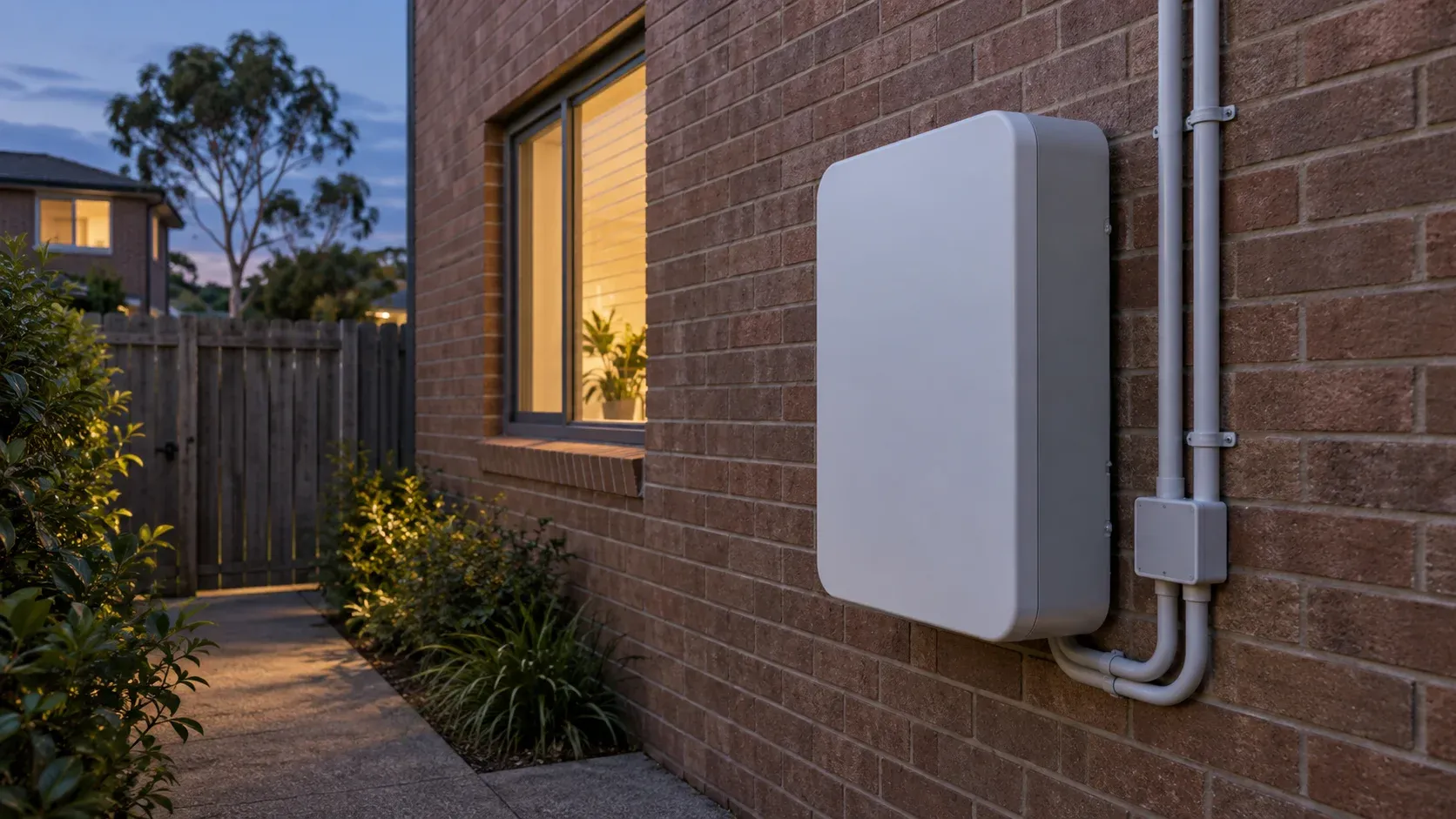

If you've bought a home battery under the federal Cheaper Home Batteries Program, your system is already VPP-capable — it has to be. The DCCEEW eligibility rules require every on-grid battery installed under the program to be technically able to join a virtual power plant. But here's the part plenty of installers gloss over: actually joining one is entirely optional.
So should you? Let's look at what's on the table in 2026.
What a VPP actually is
A virtual power plant is a network of home batteries (and sometimes other devices) coordinated by an operator — usually an energy retailer — to act like one big power station. AEMO, which ran multi-year VPP demonstrations, describes it as an aggregation of decentralised generation, storage and controllable loads coordinated to deliver services to the power system and electricity markets.
In practice: when the grid is stressed on a hot February evening, the operator draws a little energy from thousands of home batteries at once — including yours — and pays you for the privilege.
How VPPs reward you in 2026
Reward models vary a lot between operators, and that's exactly why they're worth comparing as carefully as the battery itself. The common structures are:
- Sign-up credits — a one-off bill credit for connecting your battery to the program.
- Ongoing or per-event payments — either flat quarterly/annual bill credits for staying connected, or payments each time the operator dispatches your battery during a grid event.
- Boosted feed-in rates — a premium rate on energy exported during peak windows or dispatch events, well above standard feed-in tariffs.
- Wholesale market access — operators like Amber Electric let your battery trade against real-time wholesale prices, which can pay more but exposes you to price swings.
How much is it worth? Comparison site Gridly's 2026 round-up puts typical annual earnings for most programs in the $150–$600 range, with Tesla's Energy Plan in South Australia the standout at $500–$1,000+ for Powerwall owners. Useful money — but not life-changing, which is why the fine print matters.
The trade-offs nobody puts on the brochure
Someone else controls your battery. When you join, the operator gains the right to charge and discharge your battery within agreed limits. Most programs reserve a minimum level for your own backup, but not all let you set that threshold yourself. If energy independence was the reason you bought a solar battery, handing over the keys can feel like it defeats the purpose.
Extra cycling. VPP events add charge/discharge cycles beyond your normal daily use. Operators argue the impact is modest — Gridly's analysis suggests typical event dispatch adds less than 5% to annual cycling — but every battery warranty has a throughput or cycle limit, so it's worth checking how VPP use counts against yours.
Exit terms. Some programs let you leave anytime; others claw back sign-up credits, tie you to a specific retail plan, or lock you in for a period. A generous sign-up bonus with a two-year handcuff is not the same deal as a no-strings monthly credit.
Questions to ask before you sign
- How much energy can you draw per event, and how many events per year?
- Can I set a minimum reserve so my backup power is protected?
- How does VPP cycling affect my battery warranty — in writing?
- What exactly am I paid — flat credits, per-event, or per-kWh — and can the rates change?
- What does it cost me to leave, and do I lose any credits?
- Am I required to switch to your retail electricity plan, and is that plan itself competitive?
VPPs and your battery quote
Here's where it matters for anyone still shopping: some installers and retailers quote battery prices that assume you'll join their partner VPP — the headline price includes a sign-up credit or subsidy that evaporates if you decline. A quality quote should show the battery price and any VPP incentive as separate line items, so you can judge the hardware deal on its own merits. Remember: the rebate requires VPP capability, never VPP membership.
The verdict
For most households in 2026, a well-chosen VPP is a genuine sweetener — a few hundred dollars a year for grid services your battery can comfortably provide. But it's a contract, not a formality: the difference between a good program and a bad one is control, exit terms and warranty treatment, not just the headline credit.
Start with the right battery at the right price, and treat the VPP as a separate decision you can make later. Get quotes from up to 3 trusted local installers — free, no obligation — and make sure every VPP assumption is spelled out before you sign anything.