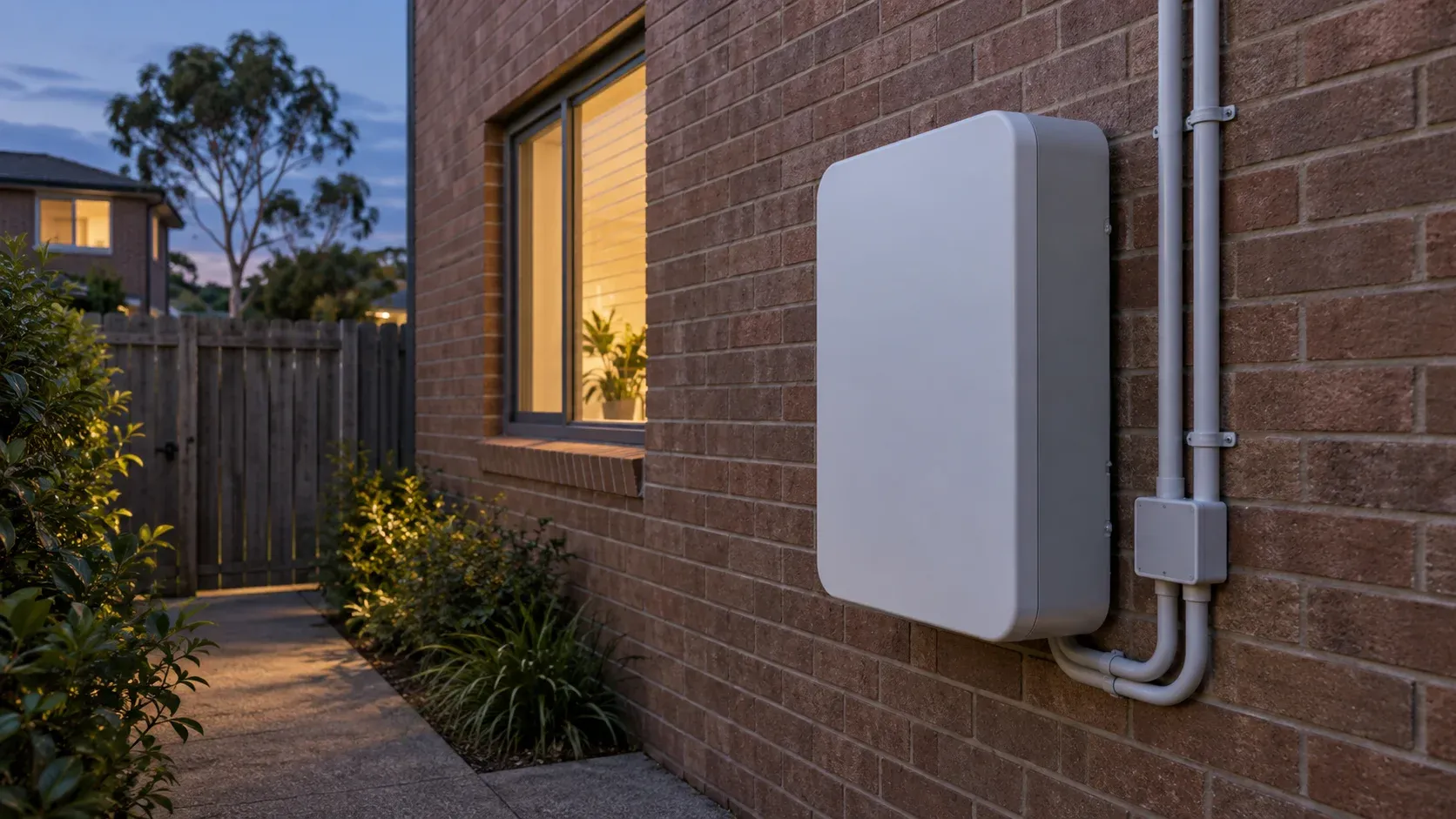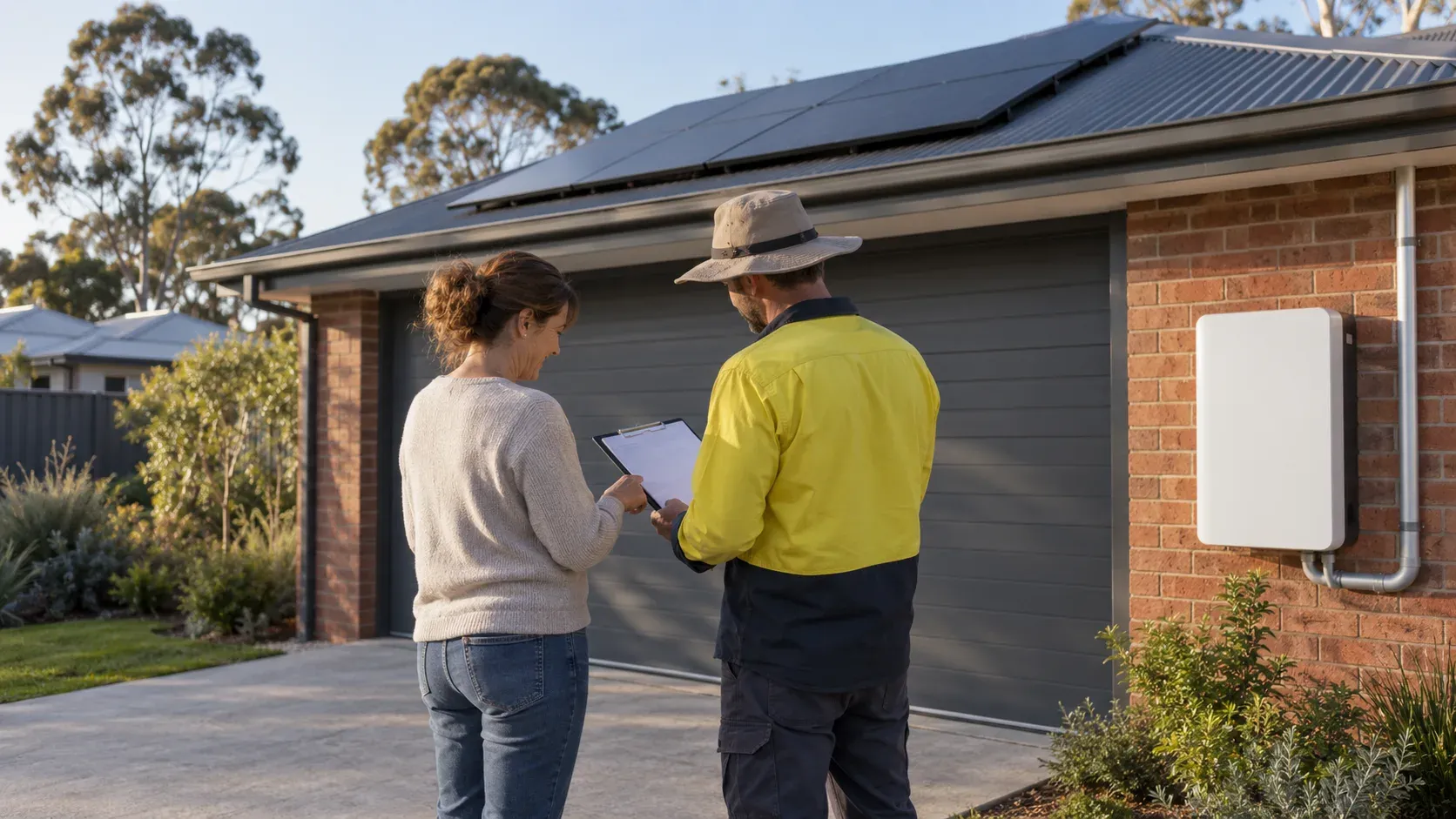
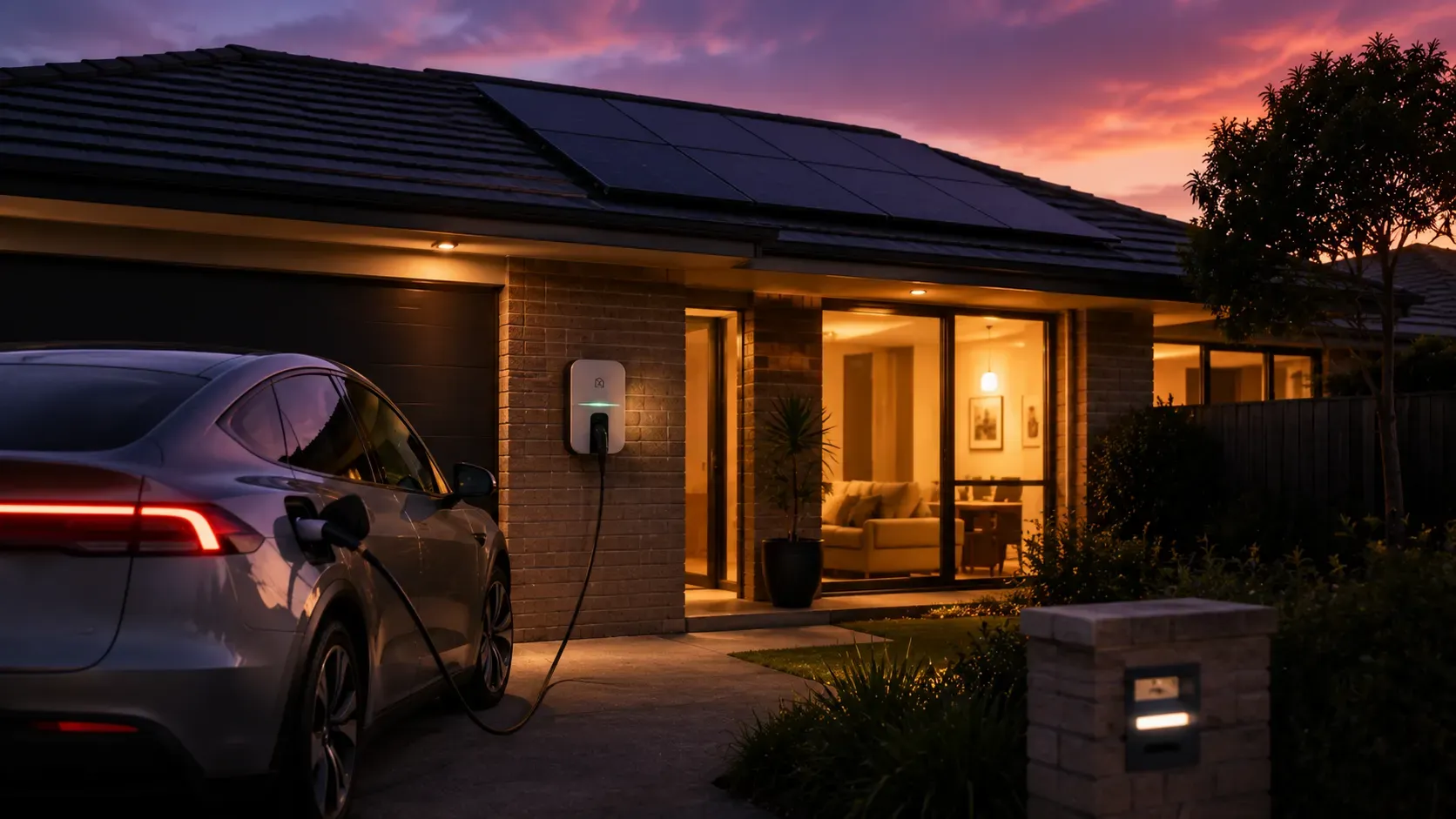
The average EV battery holds 60–100kWh — five to ten times the capacity of a typical home battery. For years, Australians have been asking the obvious question: why buy a battery for the garage wall when there's a giant one parked next to it?
In 2026, that's no longer hypothetical. Vehicle-to-grid (V2G) charging is legal, certified hardware is on sale, and the first home installations are happening. Here's an honest look at where it's at — and whether you should jump in or wait.
V2G and V2H, quickly explained
- V2H (vehicle-to-home): your EV discharges into your house, powering appliances or providing blackout backup.
- V2G (vehicle-to-grid): your EV also exports to the grid — selling energy in the evening peak, or earning through a virtual power plant.
Both need a bidirectional charger: a wall unit that can push energy in either direction. That's different from V2L (vehicle-to-load), the humble power socket on many EVs, which can run appliances but can't feed your switchboard or the grid.
What changed in August 2025
The roadblock was never the cars — it was the rules. Australia's inverter standard, AS/NZS 4777.2, didn't properly cover bidirectional EV chargers. Amendment 2 to the standard fixed that, adding specific clauses for bidirectional EV charging equipment, and took effect on 23 August 2025 — from which point the Clean Energy Council (CEC) could certify bidirectional chargers for grid connection (Clean Energy Council).
What can you actually buy?
The CEC-approved list is short but growing. Three notable entries (Zecar):
- V2Grid Numbat — Australia's first CEC-certified bidirectional charger, and the only one supporting both CHAdeMO and CCS2 plugs. Pricing is expected from around $10,000 plus GST.
- Sigenergy SigenStor V2X — a modular system where the DC charging module (~$4,850 for 12.5kW) pairs with a Sigenergy hybrid inverter ($1,800–$5,500 extra), and can integrate solar and stationary storage in one ecosystem.
- StarCharge Halo — 7.4kW, CCS2, priced at $5,990 including GST, the third to gain CEC listing.
All up, expect roughly $7,000–$15,000 installed depending on the system and your switchboard — before any electrical upgrades.
The catch: your car has to play along
This is the real constraint in 2026. Confirmed V2G-capable vehicles in Australia include the Nissan Leaf and Mitsubishi Outlander PHEV (both via the older CHAdeMO plug), and on the modern CCS2 side, the Kia EV9, with the Hyundai Ioniq 5 gaining support via firmware updates depending on build date. Volkswagen has confirmed V2G for Australian ID.4, ID.5 and ID.Buzz models (Zecar). Most other EVs on Australian roads — including most Teslas and BYDs sold to date — can't do V2G yet, regardless of the charger.
Check three things before spending a cent: your exact car's V2G support (down to build date and firmware), the manufacturer's warranty position on bidirectional use, and plug compatibility with your chosen charger.
V2G vs a dedicated home battery
Here's the honest comparison:
The battery's advantages. A home battery is always home, works with any (or no) car, and — crucially — qualifies for the federal Cheaper Home Batteries Program, which discounts eligible batteries of 5–50kWh usable capacity, tiered so the first 14kWh earns the strongest support. EVs and V2G chargers are explicitly not eligible for that discount (DCCEEW). After the rebate, a quality 10–13kWh battery can cost similar money to a V2G setup, with none of the compatibility headaches. See our solar rebates guide for what else you can claim.
V2G's advantages. Sheer capacity. A 60–100kWh car battery dwarfs any residential unit, so if your car is home during the evening peak, it can carry the house for days — and with the "sun tax" era rewarding evening exports, a big battery on wheels is well placed to earn.
The awkward bit. Your car is a battery only when it's plugged in at home. If it's at work all day, it's missing the cheap midday solar charge; a stationary battery never skips a shift.
Who should act, and who should wait
Worth acting now if you already own a confirmed V2G-compatible EV that's home most days, you have solar, and you like being an early adopter.
Better to wait if you'd need to change cars to make it work, or you just want dependable bill savings. In that case, a rebated home battery is the simpler, cheaper play today — and nothing stops you adding V2G later as more vehicles (and chargers) arrive.
Either way, the smart first step is the same: get your solar and storage foundations right. Compare up to 3 free quotes from accredited local installers — get quotes today.